
Key Highlights
- Advanced multi-axis milling machines allow for the creation of intricate geometries that traditional methods cannot achieve.
- Professional CNC milling services ensure tight tolerances are maintained across high-volume production runs.
- The integration of a CNC turning service alongside milling provides a comprehensive solution for parts requiring both cylindrical and prismatic features.
- Computer-aided manufacturing reduces human error and ensures every component meets exact digital specifications.
Introduction
In the modern manufacturing industry, the demand for intricate and highly accurate components has never been greater. Industries ranging from aerospace to renewable energy require parts that can withstand extreme conditions while fitting into assemblies with micrometre-level precision. This is where professional Computer Numerical Control (CNC) milling services become indispensable. By utilising computer-numerical control technology, manufacturers can transform raw materials into highly complex geometries with a level of consistency that manual machining cannot replicate. To achieve the best results, it is often necessary to combine various machining techniques. While milling handles complex surfaces, a complementary CNC turning service is frequently employed to manage the rounded or cylindrical elements of a design. Together, these processes form the backbone of high-end precision engineering, ensuring that every component functions perfectly within its intended system.
The Power of Multi-Axis Machining
One of the primary ways CNC milling services deliver precision for complex components is through multi-axis machinery. Unlike traditional 3-axis machines that move along the X, Y, and Z planes, advanced 4-axis and 5-axis machines can rotate the cutting tool or the workpiece simultaneously. This capability allows the machine to approach the part from almost any angle, which is essential for creating the undercuts and deep cavities often found in modern engine parts or medical housings.
By reducing the number of times a workpiece is manually repositioned, multi-axis milling significantly lowers the margin for error. Every time a part is moved by hand, there is a risk of misalignment. Modern CNC setups eliminate this variable, ensuring that all features are perfectly oriented relative to one another. This level of geometric accuracy is vital for components that must interface with other high-precision parts, where even a fraction of a millimetre in deviation could lead to mechanical failure.
Integrating CNC Turning for Comprehensive Geometry
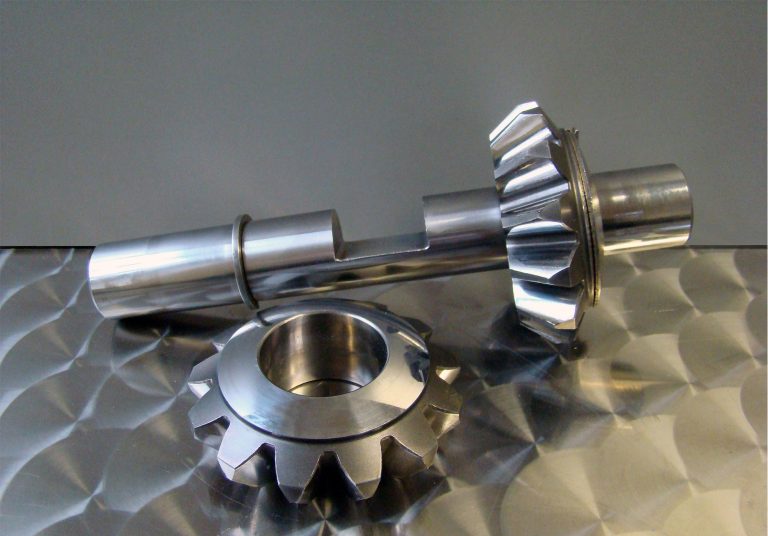
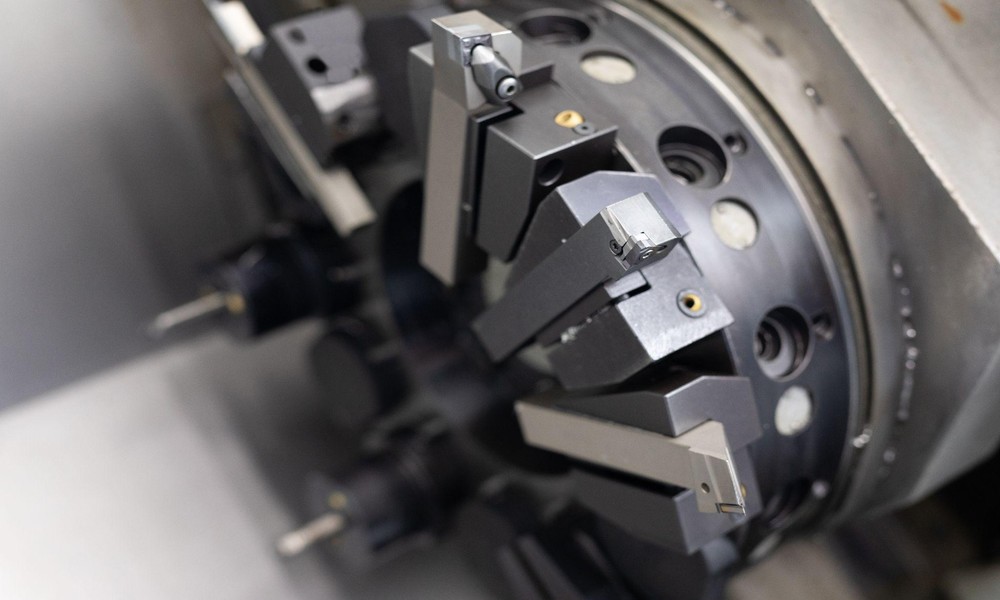
While milling is excellent for prismatic shapes and complex surface contours, many industrial components require a hybrid approach, where a professional CNC turning service plays a critical role. Turning is specifically designed for components that possess axial symmetry, such as shafts, bolts, and valves. By rotating the workpiece against a stationary cutting tool, turning produces exceptionally smooth finishes and precise diameters on cylindrical sections.
When a project requires both flat surfaces and perfectly round features, a combined manufacturing strategy is employed. For instance, a hydraulic manifold might require precision milling for its external mounting points and internal channels, while its connection ports require the high-speed accuracy of a turning process. Utilising both CNC milling services and turning capabilities under one roof ensures a seamless transition between different machining phases. This integration maintains the structural integrity and dimensional accuracy of the component from start to finish.
Material Versatility and Surface Integrity
The precision of a component involves the quality of the finish and the integrity of the material used. Professional CNC milling services are capable of working with an extensive range of materials, including aerospace-grade aluminium, stainless steel, titanium, and even specialised engineering plastics. Each material reacts differently to heat and cutting forces, meaning that precision depends heavily on the programmer’s ability to select the correct speeds and feeds.
Advanced cooling systems and high-speed spindles ensure that the material does not warp or undergo structural changes due to heat and friction. This results in a component that not only meets the visual and dimensional requirements but also retains its mechanical properties. High-quality surface finishes, often measured in microns, reduce the need for secondary polishing or grinding. This efficiency ensures that the final product remains within tolerance throughout the entire fabrication cycle, providing a reliable solution for critical applications.
Digital Accuracy and Repeatability
CNC milling services highlight the role of digital precision in modern manufacturing. Before cutting a single piece of metal, they simulate the entire machining process using sophisticated software, allowing engineers to identify potential collisions or errors in the toolpath before they occur on the factory floor. Once they perfect the programme, they can execute it thousands of times with identical results.
This repeatability is a cornerstone of precision engineering. In large-scale production, the first part must be identical to the ten-thousandth part. Digital automation removes the inconsistencies associated with human operators, ensuring that every batch meets the same rigorous quality standards. By leveraging these automated systems, manufacturers can guarantee that complex components are delivered on time and to the exact specifications required by the client, regardless of the order’s volume or complexity.
Conclusion
Achieving precision in complex component manufacturing requires a blend of advanced technology, expert programming, and high-quality equipment. CNC milling services provide the flexibility needed to tackle intricate designs, while the inclusion of a CNC turning service ensures that every geometric requirement is covered. From multi-axis capabilities to the rigorous control of material integrity, these processes ensure that modern industry can continue to push the boundaries of what is possible. By choosing a comprehensive machining approach, businesses can secure the accuracy and reliability necessary for their most critical engineering projects.
Contact Disk Precision Group for high-precision components that meet the most demanding industrial standards.