



As electronic devices continue to become smaller, faster, and more sophisticated, manufacturers require materials that deliver exceptional reliability, precision, and performance. One material that has gained significant attention in advanced electronics manufacturing is indium-based solder paste. Known for its excellent wetting characteristics, low melting point, and dependable mechanical properties, it plays an important role in assembling sensitive electronic components where conventional solder materials may not provide optimal results.
From aerospace and medical equipment to telecommunications and semiconductor packaging, indium-based solder materials help manufacturers achieve consistent, high-quality solder joints while protecting delicate components from excessive thermal stress.
What Is Indium Solder Paste?
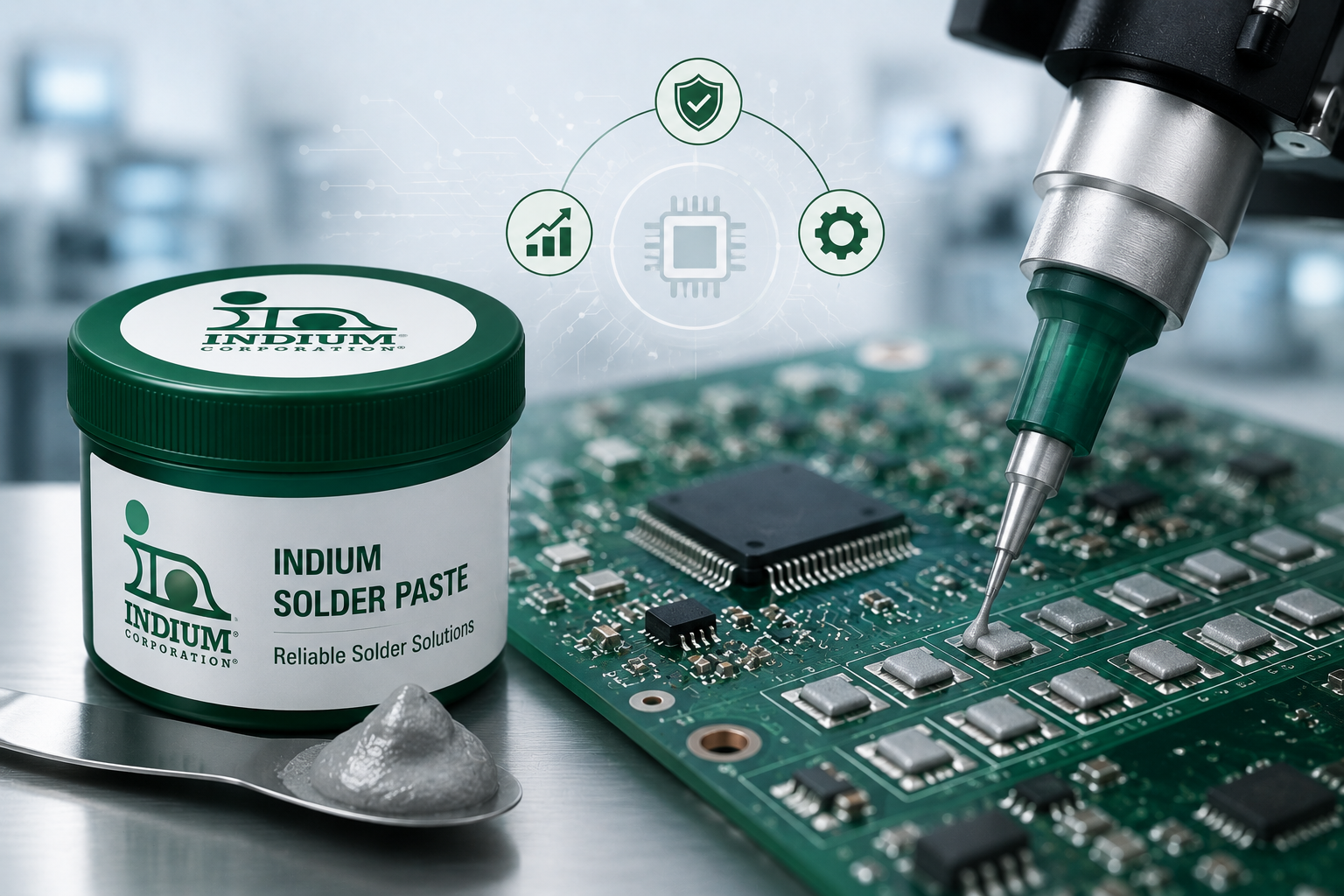
indium solder paste is a specialised soldering material that combines finely powdered indium-based alloy with a carefully formulated flux system. The paste is designed for surface mount technology (SMT) assembly, precision soldering, and other electronics manufacturing applications where reliable electrical and mechanical connections are essential.
Unlike traditional solder materials, indium alloys offer unique characteristics that make them particularly suitable for low-temperature processing and applications involving temperature-sensitive components.
The solder paste is typically supplied in precision syringes or containers, allowing accurate dispensing during automated or manual assembly processes.
How Indium-Based Solder Works
Solder paste consists of two primary components:
Metal Alloy Powder
The alloy powder provides the material that melts during the reflow process to create permanent electrical and mechanical connections.
Indium-containing alloys are engineered to deliver excellent bonding performance while maintaining dimensional stability.
Flux System
The flux removes surface oxides from component leads and printed circuit boards, improving wetting and promoting stronger solder joints.
After reflow, the flux residue may require cleaning depending on the specific manufacturing process and product requirements.
Key Features of Indium Solder Paste
Indium-based solder materials offer several characteristics that distinguish them from conventional solder alloys.
Low Melting Temperature
One of the most important advantages is the relatively low melting point.
Lower processing temperatures reduce thermal stress on:
- Sensitive semiconductor devices
- Flexible circuits
- Optical components
- Heat-sensitive substrates
- Precision electronic assemblies
This makes indium alloys especially valuable in applications where high temperatures could damage delicate components.
Excellent Thermal Conductivity
Efficient heat transfer is essential for many electronic products.
Indium alloys provide excellent thermal conductivity, allowing heat generated during operation to dissipate more effectively.
This characteristic supports improved device reliability and long-term performance.
Superior Wetting Performance
Good wetting enables molten solder to spread evenly across metallic surfaces.
Excellent wetting characteristics help produce:
- Uniform solder joints
- Reliable electrical connections
- Strong mechanical bonding
- Reduced void formation
Consistent wetting also contributes to higher manufacturing yields.
High Ductility
Unlike some harder solder materials, indium alloys remain relatively ductile after solidification.
This flexibility allows solder joints to absorb mechanical stress resulting from:
- Thermal cycling
- Vibration
- Expansion and contraction
- Mechanical movement
The result is improved long-term reliability under demanding operating conditions.
Benefits for Electronics Manufacturers
Modern electronics manufacturers choose indium-based solder materials for several important reasons.
Improved Assembly Quality
Reliable solder joints are fundamental to electronic product performance.
Indium-based solder helps manufacturers achieve consistent bonding with reduced defects during production.
Better Protection for Sensitive Components
Many advanced electronic devices cannot tolerate excessive assembly temperatures.
Low-temperature soldering reduces the likelihood of component damage while preserving product performance.
Enhanced Manufacturing Precision
Precision dispensing combined with excellent wetting characteristics supports highly accurate placement and repeatable manufacturing processes.
This is particularly valuable for miniature electronic assemblies.
Greater Reliability
Strong mechanical bonds and excellent thermal performance contribute to longer product life, especially in demanding environments.
Common Electronics Manufacturing Applications
Indium solder paste is widely used across numerous industries requiring dependable electronic assembly.
Aerospace Electronics
Aircraft and satellite systems require components capable of performing under extreme environmental conditions.
Indium-based solder materials help provide durable interconnections for mission-critical electronics.
Medical Devices
Medical electronics often contain miniature, temperature-sensitive components that require highly reliable soldering processes.
Examples include:
- Diagnostic equipment
- Imaging systems
- Implantable devices
- Laboratory instruments
Semiconductor Packaging
Modern semiconductor packages continue to become smaller while increasing performance.
Indium alloys support precise assembly of advanced semiconductor devices and microelectronic packages.
Telecommunications Equipment
Communication systems rely on dependable electrical connections capable of maintaining performance over extended service lives.
Indium solder materials help support these demanding requirements.
Optical and Photonic Devices
Many optical components require low-temperature assembly to prevent heat damage.
Applications include:
- Laser modules
- Fibre optic systems
- Infrared detectors
- Optical sensors
Factors to Consider When Selecting Solder Paste
Choosing the appropriate solder material depends on several manufacturing considerations.
Alloy Composition
Different alloy formulations provide varying melting temperatures and mechanical properties suited to specific applications.
Powder Size
Particle size influences printing accuracy, stencil performance, and fine-pitch assembly capability.
Manufacturers should select the appropriate powder classification based on assembly requirements.
Flux Chemistry
Flux selection affects solderability, residue characteristics, cleaning requirements, and overall process compatibility.
Storage Conditions
Maintaining recommended storage temperatures helps preserve paste consistency and performance prior to use.
Proper handling also contributes to consistent manufacturing results.
Best Practices for Successful Soldering
Manufacturers can maximise solder joint quality by following established process controls.
Recommended practices include:
- Store solder paste under recommended conditions.
- Allow paste to reach room temperature before use.
- Mix only when recommended by the manufacturer.
- Maintain clean PCB surfaces.
- Optimise stencil design.
- Develop an appropriate reflow temperature profile.
- Regularly inspect solder joints using quality control methods.
Attention to these details helps minimise manufacturing defects while improving overall production efficiency.
Future Trends in Electronics Assembly
As electronics continue to shrink in size while increasing in functionality, demand for specialised solder materials is expected to grow.
Emerging technologies such as:
- Wearable electronics
- Medical implants
- Electric vehicles
- Advanced semiconductor packaging
- High-frequency communication systems
will continue driving innovation in low-temperature solder materials and precision assembly processes.
Indium-based alloys are expected to remain an important solution for manufacturers seeking improved reliability and performance.
Conclusion
Indium solder paste has become a valuable material for modern electronics manufacturing due to its low-temperature processing capability, excellent wetting performance, superior thermal conductivity, and strong mechanical reliability. These characteristics make it particularly well suited for assembling sensitive electronic components used across aerospace, medical, telecommunications, semiconductor, and optical industries.
By selecting the appropriate alloy formulation, following established manufacturing best practices, and maintaining proper process control, manufacturers can achieve consistent, high-quality solder joints that support long-term product performance. As electronic devices continue to evolve, indium-based solder materials will remain an important part of advanced electronic assembly and precision manufacturing.